
What Does “On The Bridle” Mean In Horse Racing?
Watch enough horse racing, and you will hear a commentator say a horse is “on the bridle” or “still travelling on the bridle”. For seasoned racers, this phrase is second nature. For newer owners and syndicate members, it can sound like jargon. Understanding what goes on with the bridle in horse racing is a simple way to read a race more clearly and enjoy your Deva Racing runners even more.
At its heart, “on the bridle” is about how easily a horse is travelling, how much energy it has left, and how much pressure the jockey has to apply. It tells you a lot about control, stamina and the likely finish, whether you are watching a summer months flat race over a mile or a deep ground handicap chase over long distances and big fences.
The basics – what “on the bridle” actually means
The bridle is the collection of straps and metalwork on the horse’s head. It includes the bit, which sits in the horse’s mouth, the headpiece and cheek straps that hold everything in place, and the reins that run back to the jockey’s hands. Together they are the main communication line between horse and rider, alongside the saddle, legs and body language. When a horse is "on the bridle," it means it is travelling well within itself, with the jockey sitting still, holding the reins with firm but sympathetic contact, and not yet asking for maximum effort from the saddle. The horse is moving fluently, usually with its head on a natural outline rather than being pushed or scrubbed along. Commentators may also say the horse is “travelling strongly” or “hard on the steel”.
If a horse wins “on the bridle”, it generally means the win has come comfortably and the jockey never needed to fully push or drive to the line. This indicates that the horse is in peak fitness and has ample reserves of energy.
By contrast, “off the bridle” is used when the jockey is hard at work, pumping the arms, using the whip or pushing just to hold position. The horse is under pressure and may be approaching the limit of its stamina or speed.
How it looks in real time on the racecourse
In the parade ring before a race, horses are already in their bridles, with reins held by grooms or jockeys. Once they jump off, the way a horse carries itself tells you a lot. A runner that settles quickly, drops its head a touch and seems to cruise behind the leaders is a classic example of a horse travelling on the bridle. The jockey’s hands stay quiet, the reins are not being yanked, and the horse’s stride looks smooth and efficient.
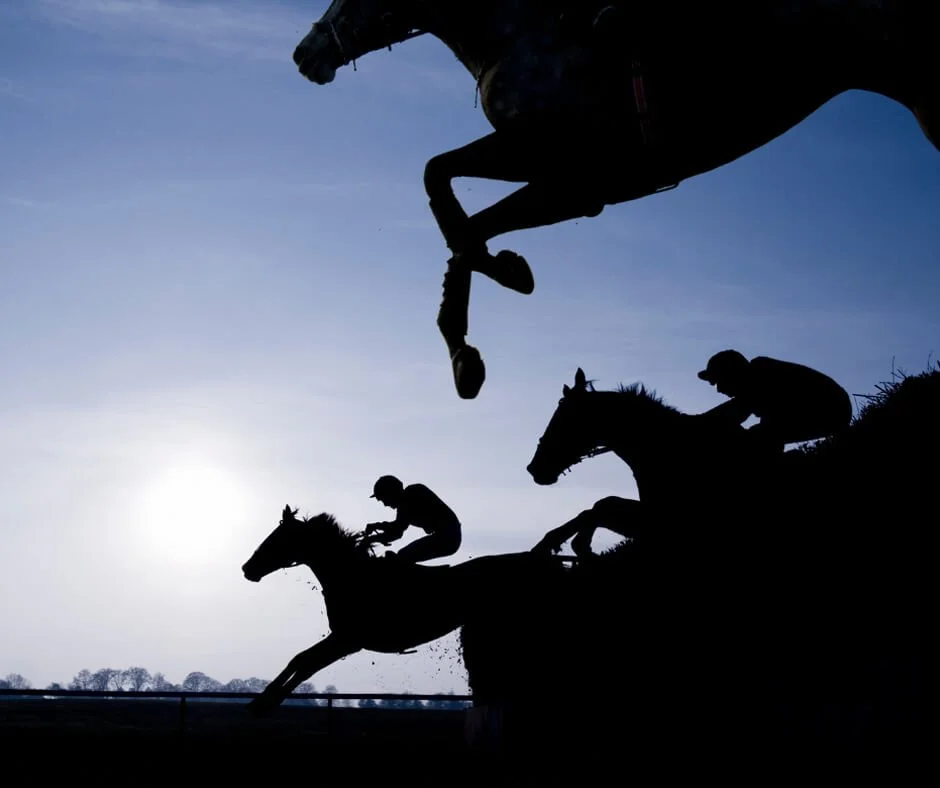
Over jumps, hurdles, or steeplechase races, a good traveller will pop each fence still on the bridle, landing with its feet in the right place and keeping a measured speed without being chased along. Over long distances and heavy going, that calm way of going is a big advantage. This means that the horse is using its stamina wisely instead of resisting the reins early and exhausting itself by the end of the race.
On the Flat, you will often hear the phrase “still on the bridle” as the field turns for home over eight furlongs or more. A horse that has not been asked yet at this point may have a strong turn of foot to come. It will usually have shorter odds of running because punters can see how well it is travelling compared with its more hard-ridden rivals.
What it tells you about fitness, trips and going
“On the bridle” is not just a pretty phrase. It gives clues about whether the trip, going and race shape suit a particular horse.
If a horse stays on the bridle for a long way over a new distance, that is often a sign it has the stamina for the trip. A proven stayer might travel comfortably in a two-mile hurdle, only coming off the bridle in the last furlong and a half when the real test begins. Over shorter trips, like maiden races for young horses, a horse that pulls hard and refuses to settle on the bridle may be telling its trainer that it wants a stronger pace or perhaps a drop back in distance next time.
Ground conditions play a part, too. On very firm going, a free-going horse may feel like it wants to run faster than ideal and can overdo its early energy. On very heavy ground, even classy horses can come off the bridle sooner because every stride takes more effort. When you see a horse still on the bridle late in a staying chase in testing conditions, you are usually looking at an animal with serious stamina and heart.
Official ratings and handicaps are built from a horse’s finishing positions and the margins between runners, not directly from how easily the winner travelled. But a win on the bridle often leads handicappers and analysts to conclude there is more to come. A lightly raced maiden who wins on the bridle may receive a higher initial mark because the performance clearly had more in hand than the bare distance suggests.
On the bridle does not always mean certain victory.
It is tempting to assume that if a horse is still hard on the bridle turning for home, the race is over. Racing rarely works that simply. A horse can be travelling strongly yet find little when the jockey finally asks. Sometimes young horses are still green and only appear to be cruising because they have not yet been asked to quicken. An apparent outsider can sit quietly on the bridle behind a strong pace, then fail to pick up when a gap appears.
Conversely, a horse off the bridle early can keep responding to pressure and outstay rivals who travelled better but used their energy in a shorter burst. Big staying chasers who grind it out over long distances are a good example. They may come off the bridle a long way from home but keep finding fence after fence, while speedier types crack.
Therefore, while being "on the bridle" is a positive sign, it is only one aspect of the puzzle, along with factors such as distance, going, weight carried, and the horse's previous run shape.
Bridle, bit and tongue ties – what is happening in the horse’s mouth
Because the phrase is tied to the bridle, it helps to understand what is going on in the horse’s mouth. The bit sits in the gap between the front and back teeth and gives the jockey a direct line of communication through the reins. The horse’s tongue rests under or around the bit. If the tongue lifts or gets in the way, breathing can be compromised, which is why tongue ties are sometimes used.
A tongue tie is a soft strap or band that holds the horse’s tongue down to stop it from sliding back. It is declared on the racecard as a piece of headgear. It is not about forcing the horse “onto” the bridle but about helping it breathe clearly so that it can run and settle in a comfortable rhythm. If a horse has had issues making a noise or stopping quickly of late, the trainer may introduce a tongue tie to aid concentration and airflow.
For Deva Racing and other professional operations, any gear like tongue ties, hoods, or other headgear is part of a careful process, balancing welfare, control, and performance rather than a quick fix.
Why “on the bridle” matters to owners and syndicate members
For owners, there are few better feelings than seeing your horse swing into the straight on the bridle while others around it are coming under pressure. It is a visual confirmation that the horse is in the right race, at the right trip, and that the trainer has judged the campaign well.
When your Deva Racing runner travels like this in a bumper, maiden or novice event, it suggests there is more to come as the horse gains experience. When a more exposed handicapper does it, especially after a small break, it can be a sign that the horse has returned to peak fitness and may be ready to put a sequence together.
That said, the ultimate goal is still the walk back to the winner’s enclosure. A horse can be referred to as having travelled beautifully on the bridle and still get collared late. So enjoy that moment, but remember that judgement on the day is always made at the finish line, not three furlongs out.
Final thoughts
“On the bridle” is one of those racing phrases that sounds technical but really means something very simple. A horse on the bridle is travelling well, conserving energy, and giving its jockey options. Reading that body language, alongside the official rating, race conditions, and trip, helps you understand why a horse is running where it is and what the trainer is trying to achieve.
For Deva Racing syndicate members, the more confident you feel with this kind of language, the more you will enjoy race days, whether you are in the stands, watching at home, or following your horse into the winner’s enclosure after a well-judged win.
If you would like to talk about how we place our horses, how we pick their trips and races, or how we plan a horse’s career from its first maiden to tougher handicaps and beyond, the Deva Racing team is always happy to go into detail.
